Where dopamine sites came from
The best-known origin is Food Never Arrives (음식만 안와요), a fake food-delivery site made in Seoul as a joke. Its Korean domain was registered on 2 April 2026. You browse menus, fill a cart, "pay" and watch a courier that never comes, and it tells you the money and calories you saved. The New York Times credited it to Park Seohyun, a 21-year-old engineering student in Seoul.
In May 2026 the Hankook Ilbo reported a wave of these sites among young Koreans and called them dopamine sites (도파민 사이트). On 27 May The Korea Times described two: the fake delivery app, and a smoke-break simulator with a start button, a live count of who else is on, and anonymous messages.
The smoke-break sites
Korean office culture has a word for the smoke break: 담타 (damta), short for 담배 타임, "cigarette time". It's as much about stepping away with colleagues as about smoking. In April 2026 The Asia Business Daily reported on Dambae Time (담배타임), a virtual smoking room that office workers, many of them non-smokers, were using for a three-minute break. A cigarette burns on screen for about the length of a real one, you pick a place like a company rooftop, and a chat shows what everyone else is escaping ("I want to go home", "meetings all day"). The developer put daily visitors at around 20,000.
That's the part of the trend VAPOR//VOID belongs to: the break itself, rebuilt as something small and social you can open between tasks.
How it went global
By mid-June 2026 Fast Company and CNN had covered the trend (CNN's piece, on 24 June, led with fake cigarettes and food deliveries), and an English version, Food Never Comes, launched on 23 June. Psychology Today, China Daily and The Conversation followed through June and July, and copies spread to China and the US: fake shops like Dopamine Shop, placebo social networks like ChillSpace, and fake "haul" sites.
Why they work
Dopamine is mostly about wanting, not having. It spikes while you browse the menu and picture the meal, before anything arrives. Dopamine sites keep that part and cut the cost, the calories and the consequences. As one explainer put it, the ritual itself provides the dopamine, not the reward.
Korean commentators tied the trend to burnout and money worries. Professor Kim Heon-sik of Jungwon University told The Korea Times: "This is an era marked by uncertainty about the future and burnout. People now tend to find comfort simply in feeling loosely connected online." He compared it to mukbang: a hit of satisfaction at the press of a button.
The criticism
Not everyone is convinced. Writing in The Conversation in July 2026, Gary Mortimer warned that sites copying shopping and delivery apps could act as gateway behaviour, keeping people used to the real apps' interfaces. Some were also found running ad trackers that went on to target visitors with ads for the very things they'd pretended to buy.
VAPOR//VOID takes that seriously: it's clearly virtual (no nicotine, no device, nothing real sold or promoted), it isn't a health or quit-smoking service, and the virtual device runs out of battery after a handful of puffs, so a break stays a break.
Where VAPOR//VOID fits
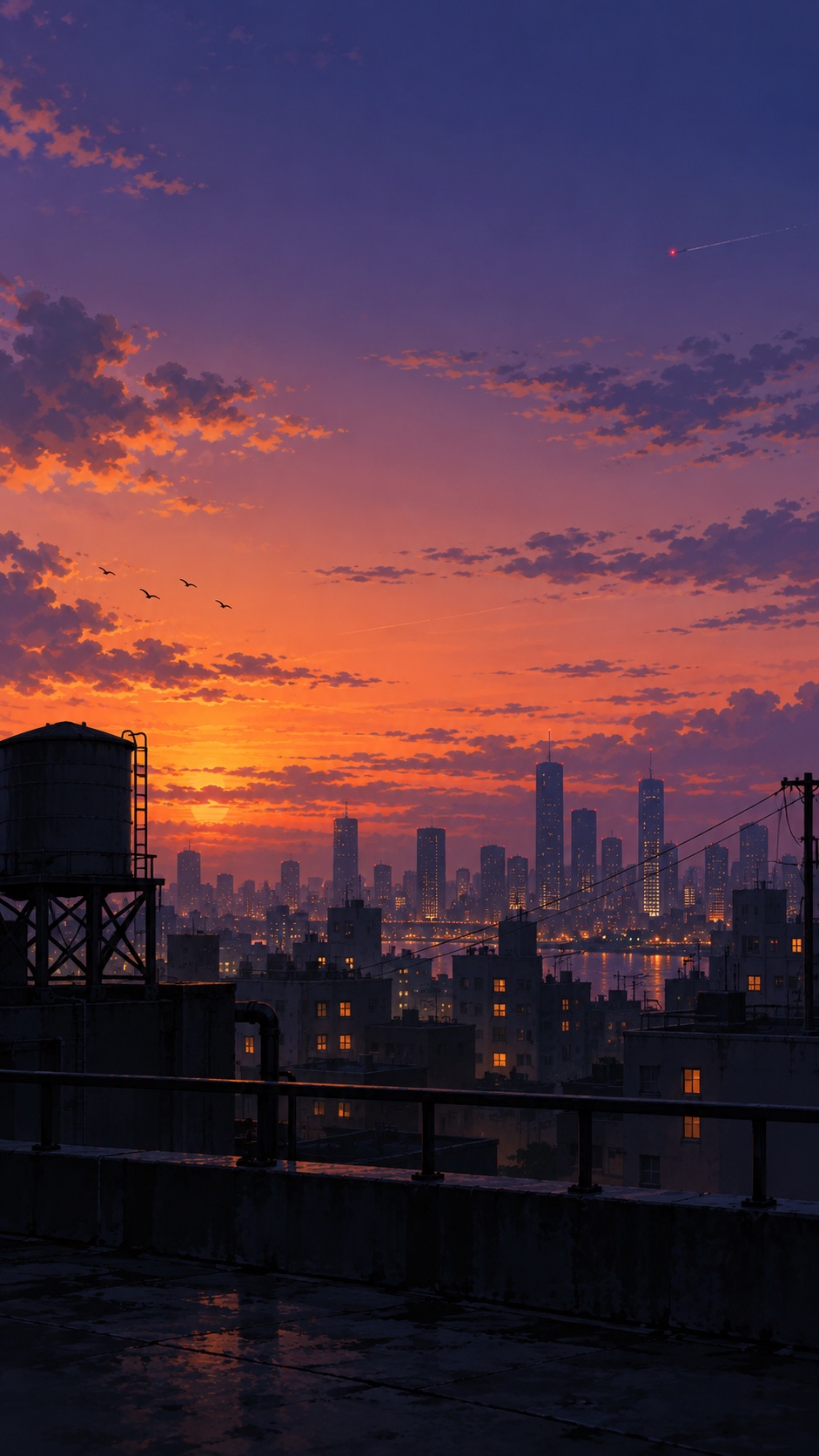
VAPOR//VOID is a smoke-break dopamine site built as a small game. Hold to puff, let go in the sweet spot (around 1.6–2.6 seconds) for a big cloud, land five perfect ones in a row for a MEGA cloud, and tap out O-rings once you've unlocked them. Rooms like a city rooftop at dusk and a rainy Tokyo alley have their own lo-fi radio, other people's clouds drift past, and you can send a short anonymous thought into the smoke before it fades.
Questions
What is a dopamine site?
A website that recreates the ritual of a habit, like ordering food, shopping or a smoke break, without the real outcome: nothing is bought, delivered or smoked. The satisfaction comes from the ritual itself.
Where did dopamine sites start?
In South Korea, in spring 2026. Food Never Arrives, a fake food-delivery site, is the best-known first example; Korean media named the trend in May 2026 and it spread worldwide by June.
What are some examples of dopamine sites?
Food Never Arrives and its English version Food Never Comes (fake food delivery), Dambae Time (a virtual smoke break), Dopamine Shop (a fake store), ChillSpace (a placebo social network) and VAPOR//VOID (a smoke-break lounge built as a game).
Why are they called dopamine sites?
Because they target the anticipation part of a habit (browsing, choosing, waiting), which is when dopamine does most of its work, and skip the cost of the real thing.
Are dopamine sites bad for you?
Opinions differ. Supporters see a harmless, cheap way to take the edge off; critics such as Gary Mortimer (The Conversation, July 2026) worry they keep people hooked on the interfaces of the real apps. Good ones are clearly fake and keep sessions short.
Ready for a break?
Try a virtual smoke break →Sources
- Wikipedia: Dopamine sites
- The Korea Times: Gen Z turn to 'dopamine sites' for quick comfort (27 May 2026)
- The Asia Business Daily: Non-smokers join 'Cigarette Time', office workers flock to virtual smoking room (April 2026)
- CNN: 'Dopamine sites' in South Korea feature fake cigarettes and food deliveries (24 June 2026)
- Fast Company: 'Dopamine sites': fake online shopping apps let you pretend to buy things
VAPOR//VOID is entertainment only. It doesn't sell, supply or promote vapes, nicotine or tobacco. · About · Community rules · Privacy